
Research interests
Optical imaging is crucial for life science to study, understand and reveal new structures or phenomena. Recently, multi-cellular aggregates that mimics in vitro and in 3D some functions of organs (organoids) emerged as new biological models. Even if remarkable efforts have been made to adapt existing tools to image developing multicellular aggregates, current solutions are insufficient to observe the spatiotemporal organization of such samples over days or weeks in non-invasive manner.
My objective is to develop new imaging techniques or modalities dedicated to the non-invaisve observation of organoids.
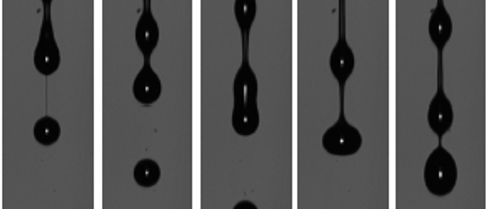
Electromechanical control of Plateau-Rayleigh instability
We recently developped a method that combines electrical and mechanical control of the fragmentation of a jet into droplets for producing monodisperse and tunable hydrogel capsules for 3D cell culture.
Light-field microscopy
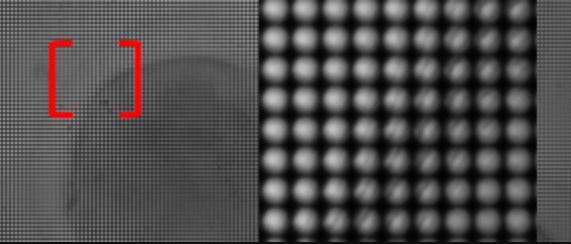
Light-field microscopy (LFM) offers instantaneous 3D imaging by capturing both spatial and angular information from a semi-transparent specimen. We aim to push back the current limits of LFM both in terms of depth and imaging volumes by combining innovative experimental and numerical approaches.
Large-scale label-free microscopy
In the BiOf lab, we aim to develop simple, robust and cost-effective solutions to image large populations of multi-cellular aggregates (organoids) placed directly inside an incubator.

Full-field optical coherence tomography
Full-field OCT is a simple interferometric technique that provides rapid and high-resolution en-face images of biolofical samples. We aim to develop new techniques to increase both the imaging depth, contrast,field of view of FF-OCT and develop new data processing for dynamic acquisitions.

Supervision
Postdoctoral scientists :
Charlie Kersuzan
PhD students :
Chloé Thiriet (100 %)
Lucas Suire (50 %)
Théo Regny (50 %)
Kanak (50 %)
Selected publications
- A. Badon , G. Lerosey, A. C. Boccara, M. Fink, A. Aubry. Retrieving time-dependent Green’s functions in optics with low-coherence interferometry, Physical Review Letters 114 (2), 023901 (IF 8.839)
- (2026). Continuous scanning full-field OCT for fast volumetric imaging of multi-cellular aggregates, Biomedical Optics Express 17(3), 1163
- A Bazin, A Badon Increasing the spatial bandwidth product in Light Field Microscopy with remote scanning., Biomedical Optics Express 16 (3), 1062-1070
- (2025). Extending the Range of Sizes of Monodisperse Core‐Shell Hydrogel Capsules from Composite Jet Breakup by Combined Electrical and Mechanical Actuation, Advanced Science 12(38), e05501
- (2025). Pheno‐Morphological Screening and Acoustic Sorting of 3D Multicellular Aggregates Using Drop Millifluidics, Advanced Science 12(9), 2410677
- (2025). zIncubascope: Long-term quantitative imaging of multi-cellular assemblies inside an incubator, PLOS ONE 20(1), e0309035
- A. Badon , L. Andrique, A. Mombereau, L. Rivet, A. Boyreau, P. Nassoy, G. Recher. The Incubascope: a simple, compact and large field of view microscope for long-term imaging inside an incubator, Royal Society Open Science 9 (2)
- A. Badon , S. Bensussen, H. J. Gritton, M. R. Awal, C. V. Gabel, X. Han and J. Mertz. Video-rate large scale imaging with Multi-Z confocal microscopy, Optica 6 (4), 389-395
- A. Badon , V. Barolle, G. Lerosey, A. C. Boccara, M. Fink, A. Aubry. Distortion matrix concept for deep imaging in scattering media, Science Advances 6 (30), eaay7170
- C. Kersuza, A. Jana and A. Badon Continuous scanning full-field OCT for fast volumetric imaging of multicellular aggregates., Biomedical Optics Express 17 (3), 1163-11721
- G. Recher, P. Nassoy, A. Badon, Remote scanning for ultra-large field of view in wide-field microscopy and full-field OCT , Biomedical Optics Express 11 (5), 2578-2590